
Secret Elixirs and the Balance of the Tanbur
Working with Kursdish Iranian master musician, Arash Moradi , finding and re-finding The Shahnameh, the Epic of the Kings

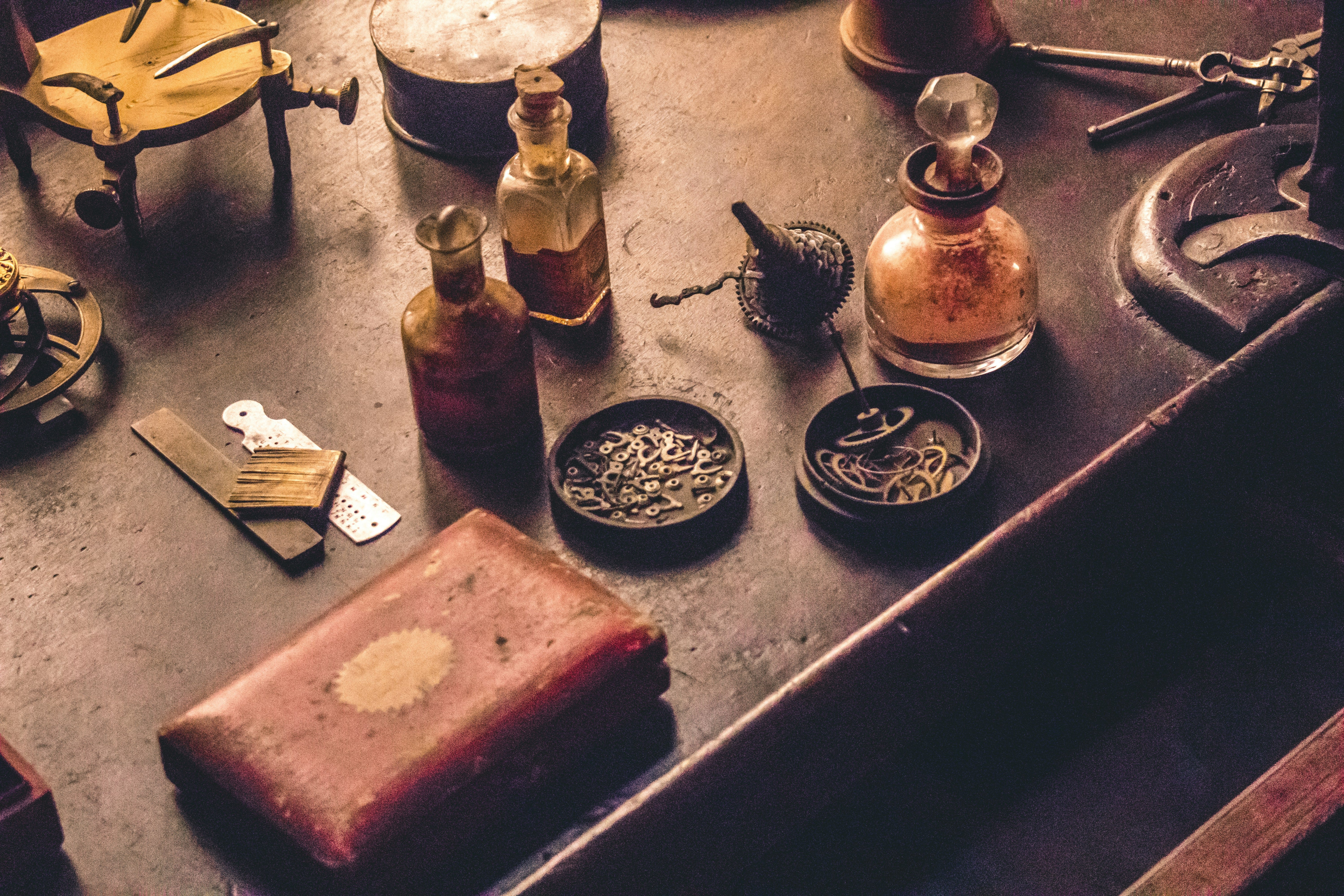
(Image Szymon Fischer - Unsplash)
The longer you stick with a story or cycle of stories, the more they ‘land’ as Nell Phoenix put it last night at Torriano StoryNight in London. I’ve been working with Arash Moradi for 4 blissful days on Shahnameh, the Persian/Iranian Epic of the Kings. We’ve been touring Shahnameh for 15 years thanks to multiple commissions from the British Museum, the Smithsonian and a UK tour with Adverse Camber. There’s always something new to discover.
In Shahnameh, there is a moment where the great hero Rustam realises a cure-all herbal elixir in the possession of the Shah could heal his son who is dying on the battlefield. We’ve always cut this part of the tale, but this week I was impelled to include it. Arash told me all the Kings of the Shahnameh would have had such a potion, a Nosh Daru, containing, among other secret ingredients, cinnamon, mace, musk, cloves, saffron, hyacinth and earth almond - one of the many benefits of the cure was that it made you smell divine. The King denies Rustam the Nosh Daru. (This sparked a big debate between Arash and I about the state of the NHS versus private health.)
Nosh Daru, Balm of Fioraventi, Soloman’s Opiate Mithridateum, are just a few of the names of world panaceas. They sound as elusive as health itself. Arash told me a Kurdish greeting,
‘May your instrument always be in tune.’
He then held his instrument, the Kurdish tanbur so that it was perfectly balanced on two of his fingers.
‘A pir, a teacher, was about to die and his followers were full of fear and sadness at his loss. The guru turned to his followers and said, ‘Take my tanbur and travel from village to village. Every time you come to a town, play my tanbur; if it’s in perfect pitch, that’s where I will be reborn. After thirty years of searching, the travellers came to a village where the tanbur was perfectly tuned even after their long journey. One of them began to play. Not only did the tanbur keep perfect pitch, but during the song, a woman gave birth to a baby. The followers knew the child was their teacher, reborn.’
The tanbur is so sacred that players wash their hands before touching it and kiss it before playing.
‘God had made humans from clay, but he couldn’t bring them to life. He called the angels for help and one of them came with a tanbur. As soon as the angel touched the strings, the clay humans began to breathe, move, dance and live.’
In Shahnameh it’s not the Kings who play the tanbur but the hero, Rustam - sometimes described as an Iranian Hercules. This is an over-simplification. Rustam is heroic because he is in perfect balance. He prefers to keep clear of war. He drinks from his sacred drinking cup, the rhyton, plays music and celebrates with friends. But some Shah or other always winkles him out and forces him onto the battlefield. Consequently, Rustam’s losses, his guilt and his grief reach epic proportions. (Yet another debate between Arash and I on the PTSD of soldiers.)
As someone who has deep regret for past actions, I am drawn to the likes of Persian Rustam and Irish Cuchulain. When Cuchulain faces unbearable grief and rage he goes and fights with the waves. Rustam gets on the back of his daemon his beloved heart-companion, shining Rahksh, and lets his beloved horse lead him. A sound calls him. Tanya Batt, New Zealand storyteller uses the Maori word mahi to describe her practice as a storyteller. And tanbur is Rustam’s mahi. On the back of Rahksh a sound strikes his heart - ‘as if the rays of the sun had mixed with the breeze and were playing the leaves and branches.’ The world’s first tanbur is in the leaves of the Mulberry Tree.
Rustam takes it down and plays and as he plays, all losses are rinsed from his soul.
He’s re-born, thanks to the tanbur.
I have to come clean – Arash and I are not quite sure where this story came from. Did he tell it to me? He doesn’t remember. Did he say something so that I wove this into our Shahnameh to give Rustam solace in his grief? More likely, it was carried on the breeze, on the tunes and ancient maqams that Arash plays, on the breath of Firdawsi who wrote Shahnameh 1000 years ago, and all the old poets who whispered in his ear.
May you hear the call of your own particular tanbur. May you sit under the Mulberry tree and play, and as you play, may
‘the seven seas be a single pool,
the seven planets a spark,
the nine worlds a grain of sand,
the skies a speck of dust.
May an ant have the force of an elephant,
a camel the power of a flea.’
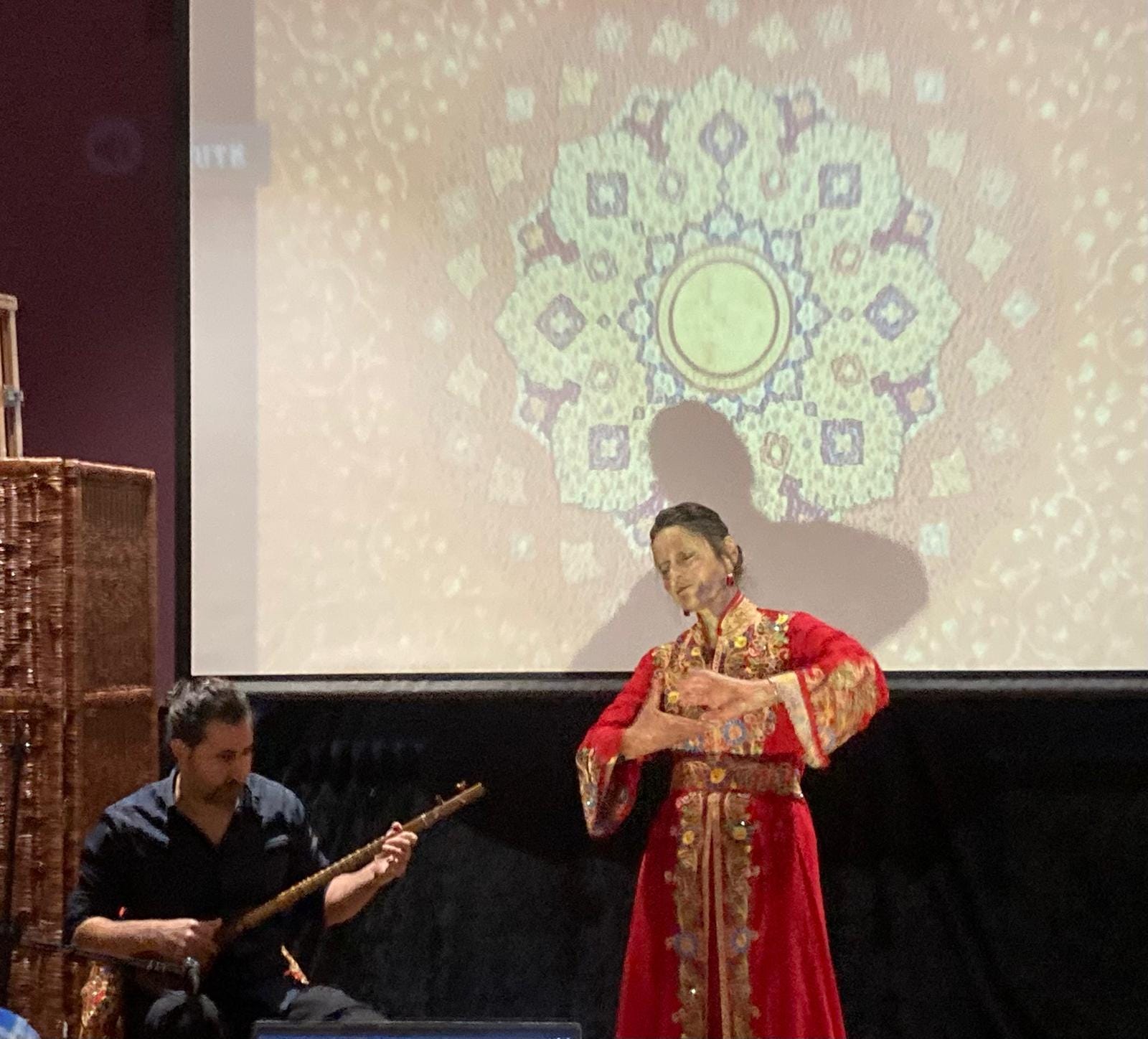
Arash and I at GuestHouse Storytellers on Monday Night. Photo thanks to Neal Richardson.
The stories about the tanbur are told by Arash in Herba Mythica, the Myths and Folktales of Sacred Healing Plants with contributions from 30 plus storytellers:https://thehistorypress.co.uk/publication/herba-mythica/
Arash Moradi’s The Bridge:
and you can find out more about him: https://moradiensemble.com/about/arash-moradi/
Tanya Batt: www.imaginedworlds.net
GuestHouse Storytellers, Newhaven, East Sussex: https://guesthousestorytellers.com/
Nell Phoenix’s Club in North London: https://www.facebook.com/p/StoryNight-at-Torriano-100069787464247/
Adverse Camber: https://www.adversecamber.org/
Dick Davies is good - otherwise the old translations in the British Museum are wonderful - they retain the poetic language even if it's a bit archaic and none of the texts are abridged...Thanks for your comment..
Oooh so good so true wish I could have caught this at the Torriano xxx